

Efficient is solving computing's energy problem
Energy efficiency limits what devices can do
Conventional processors spend most of their energy moving data instead of computing. Fixed accelerators help a single kernel, but can’t support full workloads or scale as models change. Either one limits how much intelligence you can put in a device.
We rebuilt compute from the ground up
We’re reimagining computing with our energy-efficient Fabric architecture. By intelligently distributing workloads, we unlock efficiencies in your existing application code and deliver the highest energy efficiency and performance compared to any general-purpose processor on the market.
.svg)
Up to 100x more efficient
Measured on whole applications running on real silicon. Not idle power, and not one kernel hand-tuned for fixed-function hardware.
Heading 1
Heading 2
Heading 3
Heading 4
Heading 5
Heading 6
Lorem ipsum dolor sit amet, consectetur adipiscing elit, sed do eiusmod tempor incididunt ut labore et dolore magna aliqua. Ut enim ad minim veniam, quis nostrud exercitation ullamco laboris nisi ut aliquip ex ea commodo consequat. Duis aute irure dolor in reprehenderit in voluptate velit esse cillum dolore eu fugiat nulla pariatur.
Block quote
Ordered list
- Item 1
- Item 2
- Item 3
Unordered list
- Item A
- Item B
- Item C
Bold text
Emphasis
Superscript
Subscript
.svg)
General-purpose flexibility
The reconfigurable Fabric architecture can be updated in software, so your design always stays current even as models evolve.
Heading 1
Heading 2
Heading 3
Heading 4
Heading 5
Heading 6
Lorem ipsum dolor sit amet, consectetur adipiscing elit, sed do eiusmod tempor incididunt ut labore et dolore magna aliqua. Ut enim ad minim veniam, quis nostrud exercitation ullamco laboris nisi ut aliquip ex ea commodo consequat. Duis aute irure dolor in reprehenderit in voluptate velit esse cillum dolore eu fugiat nulla pariatur.
Block quote
Ordered list
- Item 1
- Item 2
- Item 3
Unordered list
- Item A
- Item B
- Item C
Bold text
Emphasis
Superscript
Subscript

Fits developer workflows
Our effcc Compiler is a drop-in replacement for GCC or Clang. Simply bring your existing code, compile, and go.
Heading 1
Heading 2
Heading 3
Heading 4
Heading 5
Heading 6
Lorem ipsum dolor sit amet, consectetur adipiscing elit, sed do eiusmod tempor incididunt ut labore et dolore magna aliqua. Ut enim ad minim veniam, quis nostrud exercitation ullamco laboris nisi ut aliquip ex ea commodo consequat. Duis aute irure dolor in reprehenderit in voluptate velit esse cillum dolore eu fugiat nulla pariatur.
Block quote
Ordered list
- Item 1
- Item 2
- Item 3
Unordered list
- Item A
- Item B
- Item C
Bold text
Emphasis
Superscript
Subscript
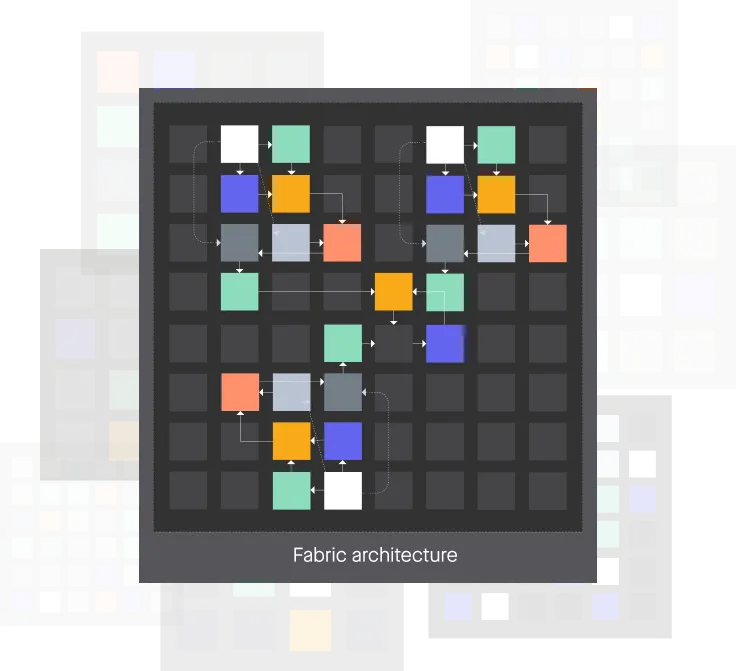
On-device intelligence
Real-time processing and decision-making, even in the most resource-constrained environments.
Heading 1
Heading 2
Heading 3
Heading 4
Heading 5
Heading 6
Lorem ipsum dolor sit amet, consectetur adipiscing elit, sed do eiusmod tempor incididunt ut labore et dolore magna aliqua. Ut enim ad minim veniam, quis nostrud exercitation ullamco laboris nisi ut aliquip ex ea commodo consequat. Duis aute irure dolor in reprehenderit in voluptate velit esse cillum dolore eu fugiat nulla pariatur.
Block quote
Ordered list
- Item 1
- Item 2
- Item 3
Unordered list
- Item A
- Item B
- Item C
Bold text
Emphasis
Superscript
Subscript
One architecture. Every application.
Our core innovation is the Fabric architecture. The Electron E1 puts it in hardware. The effcc Compiler makes it work.
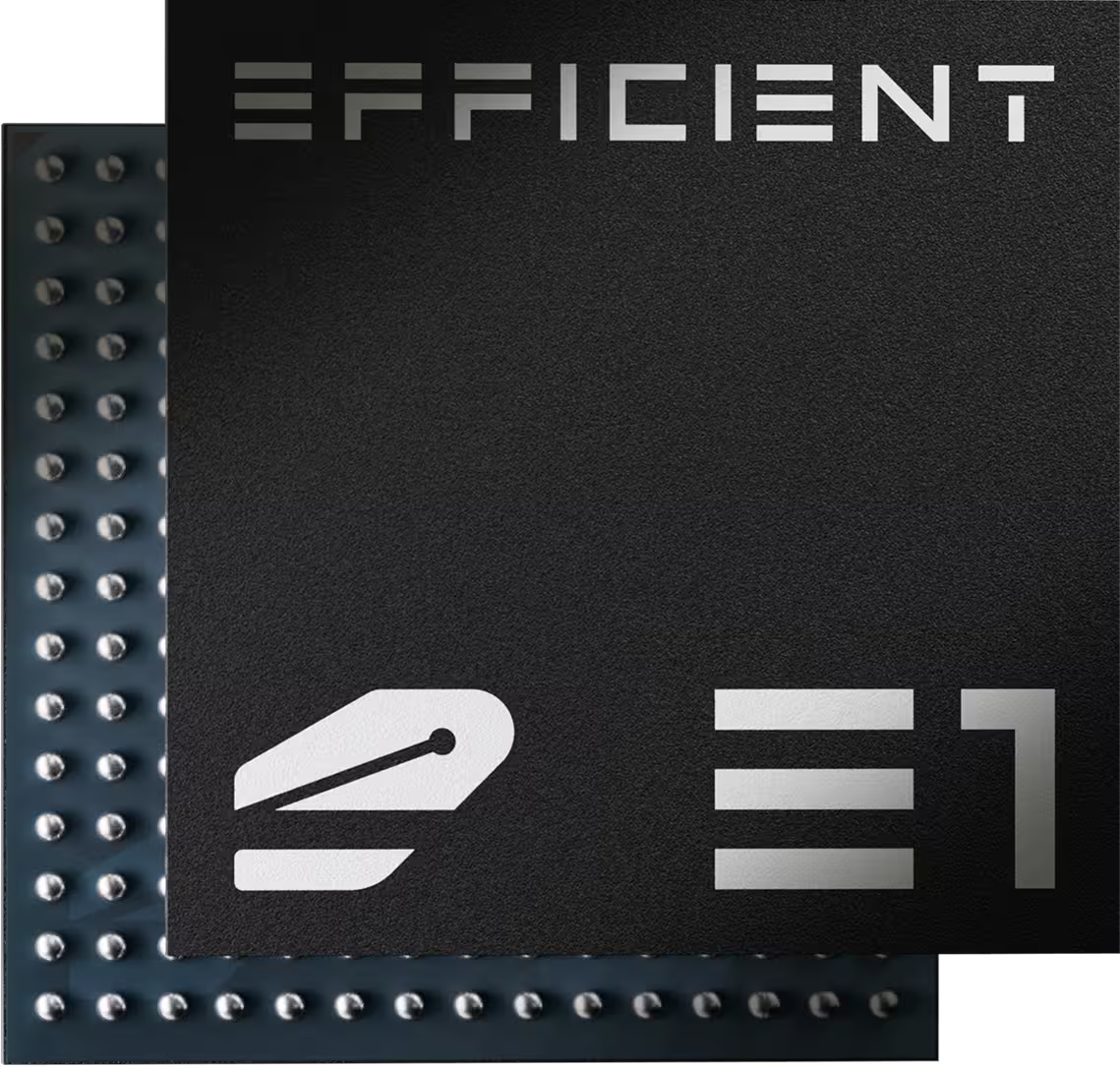
Electron E1 general-purpose processor
A fully functioning general-purpose processor, not an accelerator. Based on the Fabric architecture, Electron E1 runs your whole application at maximum efficiency without sacrificing performance or generality.
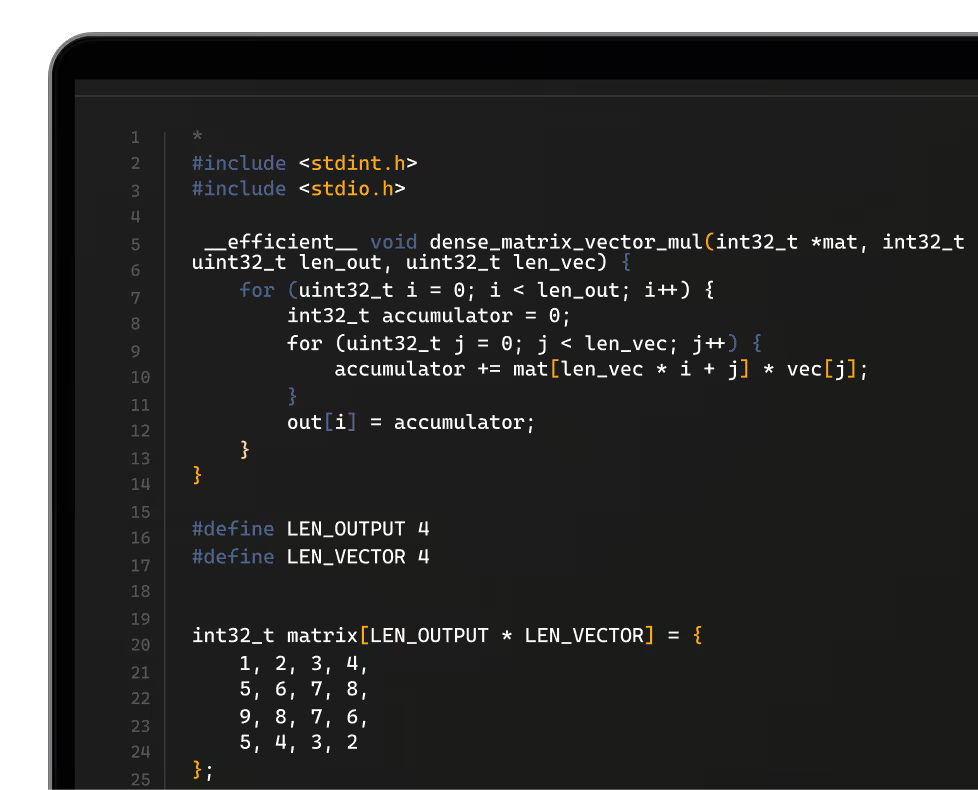
effcc Compiler
Your existing code already holds more efficiency than today’s processors can realize. Unlock it with the effcc Compiler. Simply drop in your code, and the compiler extracts parallelism, places and routes your program onto the Fabric, and compiles in minutes.
Physical AI autonomy
On a drone, energy spent on compute is energy not spent on flight. Electron E1 runs the whole autonomy pipeline on one part. You get a smarter device with less weight, longer flight times, and decreased cost.
.svg)
Infrastructure observability and industrial automation
A remote sensor shouldn’t drain its battery streaming raw data to the server without an event. By enabling real-time data processing and predictive maintenance, Electron E1 improves operational efficiency and reduces manual oversight.

Space and defense operations
In orbit, every extra watt of compute means a heavier and more expensive spacecraft. Electron E1 processes more on board and downlinks only mission-critical findings in standard C and C++. Design the mission, not new hardware.
.svg)
Backed by industry-leading investors



.webp)

.webp)








Stay updated with the latest articles

Solving computing’s energy problem with Efficient Computer’s $97M Series B
.png)
Efficient Computer, Taking on AI's Energy Problem, Announces $97M to Scale its Processors from Physical AI to the Datacenter