

Solving computing’s energy problem with Efficient Computer’s $97M Series B
.png)
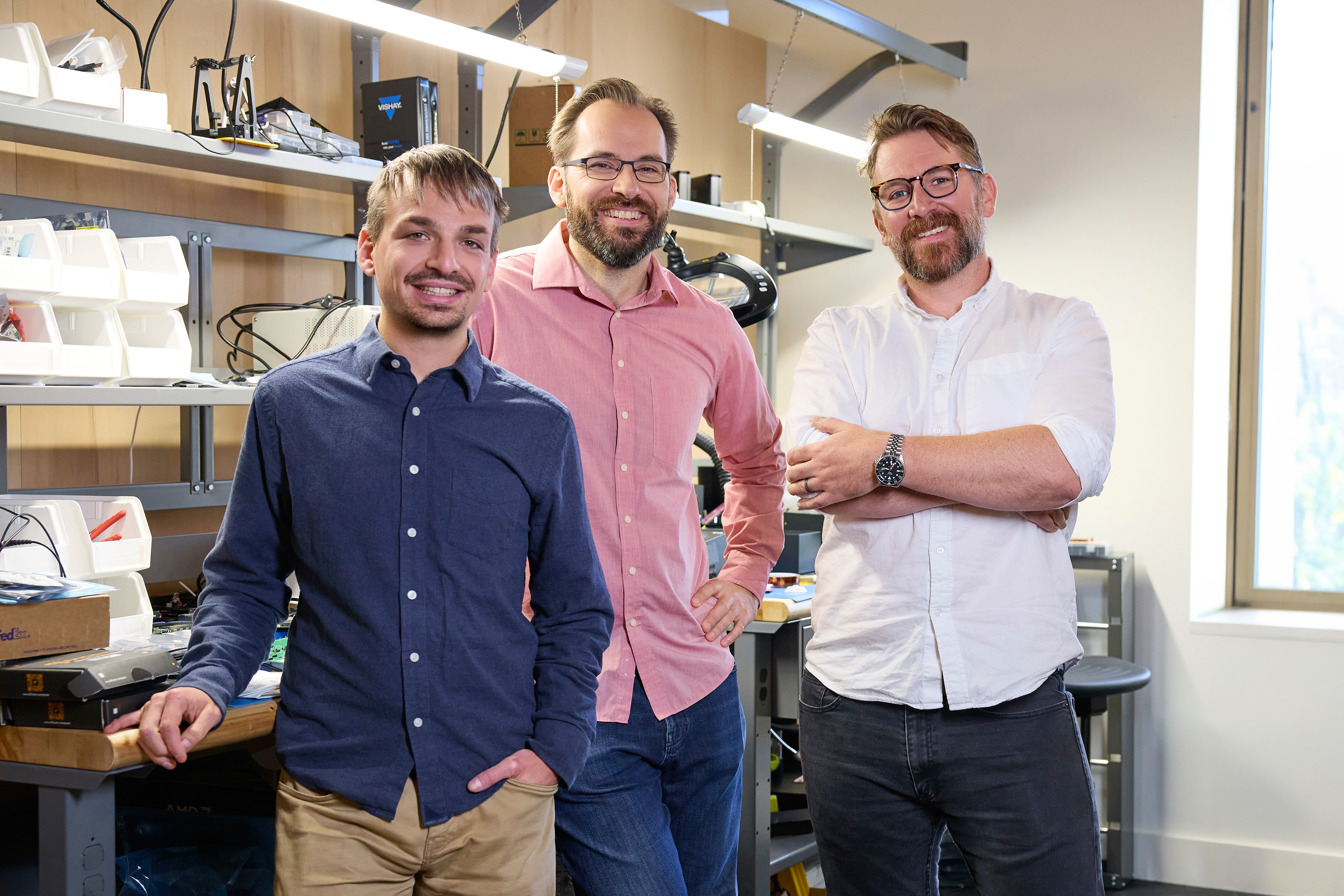
Efficient Computer is building the most energy-efficient processors that have ever existed, accelerated by our recent raise of a $97M Series B round led by TQ Ventures.
About 10 years ago, Nathan, Graham, and I founded Efficient Computer to fundamentally rethink computer architecture, solving for efficiency, without compromising on generality. Our architectural approach is inherently scalable and embraces the rapid pace of innovation and software heterogeneity across AI and computing. At Efficient, we are leading the way to a future for computing that enables rapid innovation without hitting a wall of energy limitations.
Scaling efficiently. Performance can no longer come at the expense of efficiency. Since CMOS process scaling has slowed with the incipient end of Moore’s Law and Dennard Scaling, most compute performance scaling has come in the form of architectural tradeoffs that prioritize performance at a cost in efficiency: massive, power-hungry memory structures and interconnects, and huge inefficient front-ends that attempt (and often fail!) to extract parallelism from sequential instruction streams. It is untenable if every incremental improvement in computing speed comes at a larger, incremental cost in inefficiency. Energy is the main limit on the capability of computing and AI systems addled by such inefficiency.
Flexibility is fundamental. Efficiency can no longer come at the expense of versatility. The latest crop of narrowly specialized, fixed-function AI accelerators seem appealing, but they are a devil’s bargain: efficiency and speed for today’s AI, but with a total forfeit on programmability and adaptability. This kind of overspecialization creates two problems: the constant threat of obsolescence and the unmet need for general-purpose computation.
Constant obsolescence is the dark side of constant innovation: what happens when AI changes again next year, and then again a year later? The accelerators go cold, requiring prohibitively expensive new silicon with each change, and a never-ending chase of ever-changing algorithms.
Unmet heterogeneity acknowledges that real, AI-enabled systems do not do only one computational thing; they are highly heterogeneous, requiring many different computations to run efficiently in concert. In a world limited to fixed-function accelerator chips, unaccelerated computations are relegated to inefficient CPU architectures that haven’t changed in 50 years. What about the robot guidance systems, signal processing chains, and agentic tool calls not supported by an accelerator? These become a central limitation.
The inefficiency of the unaccelerated part of a computation puts an upper limit on a system’s overall efficiency. Imagine if 90% of your computation fits your accelerator; that probably sounds pretty good. But! Even with an unrealistic, idealized accelerator that makes the accelerable 90% of your computation magically drop to zero time and energy cost, the maximum benefit you’ll see is just 10x, because the remaining 10% stays inefficient. It’s a fundamental scaling rule in computer architecture called Amdahl’s Law and there’s no escaping it: the part you cannot make efficient will always be your efficiency bottleneck.
Energy is everything. It took 10 years, but the industry is beginning to wake up to what we at Efficient have known all along: energy is everything. At Efficient, we have been focused on energy since the start, with Amdahl’s Law at the heart of our design philosophy. The main determinant of the value of future computer systems is their efficiency, and for a system to be efficient, the whole system must be efficient. The more perception, navigation, and control that an autonomous inspection drone can do per Joule of energy in its battery, the more valuable that robot is to critical infrastructure. The more intelligence that an enterprise, on-prem AI installation can do per kWh of grid energy, the more that system increases the productivity of the enterprise. Efficient’s technology brings 10-100x energy-efficiency improvement compared to traditional CPU architectures. These benefits apply to the full range of heterogeneous computations in AI-enabled systems. Efficient is defining the next era of energy efficient processors that will revolutionize use cases from physical AI to the datacenter.
An Efficient future. We’re making our vision of an efficient future a reality with the latest $97 million in Series B financing, which takes us to a total raise of $173 million at a $650 million valuation. The funding and valuation speak to the market’s demand and our investors’ confidence in Efficient’s groundbreaking technology.
We’re already putting the resources to work and seeing overwhelming demand for Electron E1, as we launch it at volume to bring 10-100x better efficiency to embedded physical AI systems today: robots, drones, infrastructure, and wearables. At the same time, we’ve already begun the work to scale our technology to domains with higher performance requirements, and even more urgent efficiency requirements: humanoid autonomy, self-driving, and agentic AI at the edge and in the cloud.
I’m deeply grateful to our lead investor TQ Venture, along with a world-class cohort of supporting investors including Union Square Ventures, Eclipse, Giant Ventures, Triatomic Capital, TO Capital, TF Capital, Mana Ventures, Toyota Ventures, Overmatch, and Borderless for their conviction in Efficient’s roadmap and path forward. I’m personally very excited to see what we can do, now that energy is no longer a limitation.