

Introducing the Electron E1 processor
Energy waste has long been computing’s greatest constraint. Efficient Computer eliminated it. Now, build freely, deploy anywhere, and run for years—not months.
.avif)
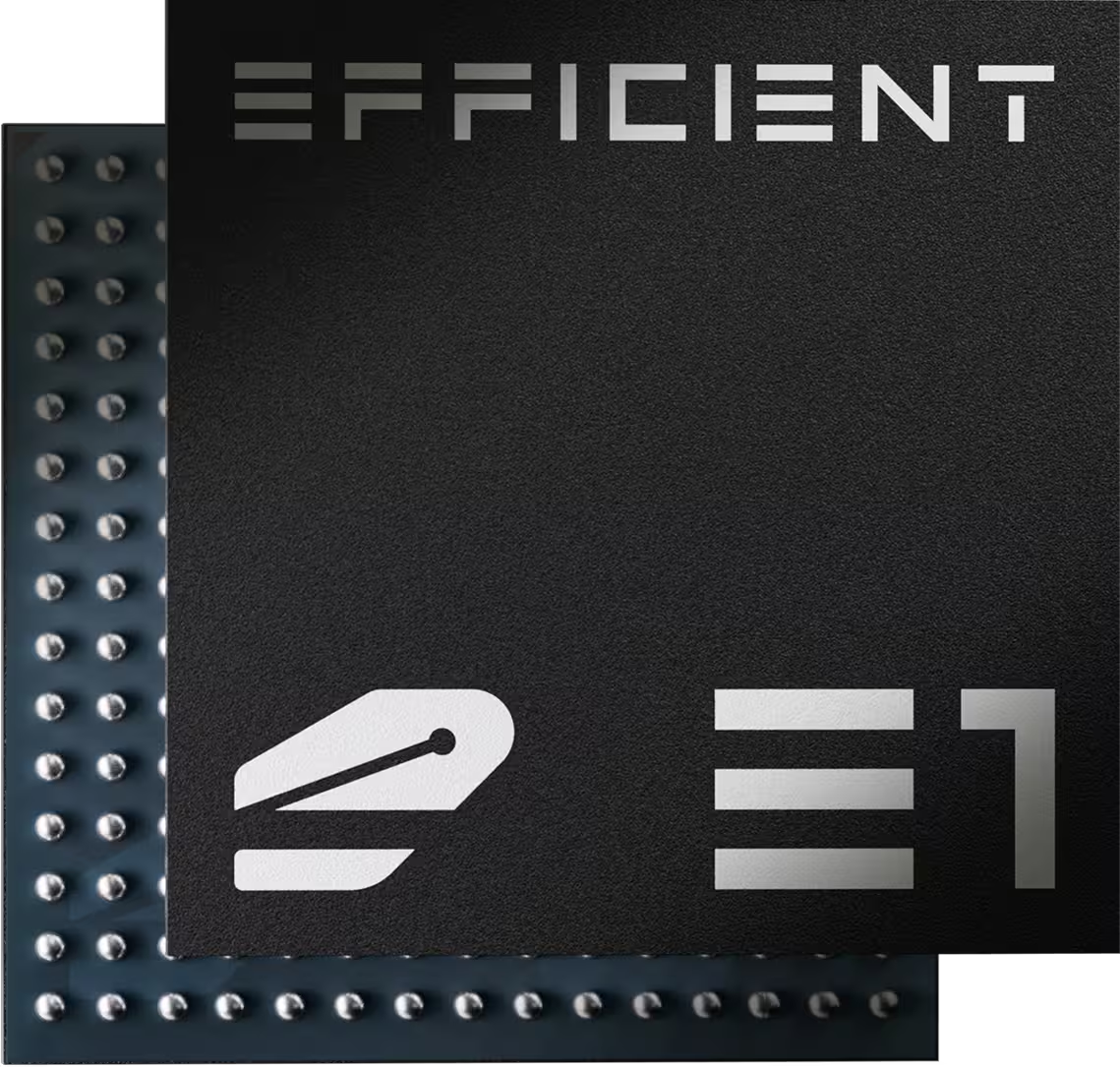
When energy is no longer the tradeoff, what will you create?
Innovation demands processors that can keep up. Readily available processors are built on technology that is over 70 years old. This limits innovation.
To meet modern demands, processors must be entirely reimagined, breaking free from the constraints that have plagued computing for decades.
This spatial dataflow architecture supports general-purpose computing, without being bound by the constraints of traditional processor designs or limited by fixed-purpose accelerators.
The Electron E1 processor combines efficiency, high performance, and general-purpose programmability to unlock new use cases across many industries, including industrial automation, space and defense, critical infrastructure, and wearables.
Experience unmatched results:
- Up to 100x energy efficiency improvements over traditional low-power CPU
- Intelligent edge applications that run for years, not days
- The effcc Compiler supports high-level languages and frameworks so that developers can optimize existing applications for the Fabric processor without rewriting code
Benchmarks/data
Electron E1: A new standard in energy efficiency
Removing the energy barrier for all applications.
-p-2000%201.avif)
Features/benefits

Familiar, general-purpose software programmability
Industrial automation systems often struggle with energy inefficiency, leading to higher maintenance cost and increased manual oversight.The Electron E1 general-purpose processor allows battery-operated vibration and acoustic sensors to perform local FFTs and predictive maintenance algorithms for years, eliminating the latency and cost of off-device communication. By enabling real-time data processing and predictive maintenance, our technology reduces manual oversight and improves operational efficiency.
- Runs general-purpose code on Efficient’s fabric
- Support for a growing variety of valuable developer on ramps
- Available Now
- C
- Coming
- TFLite
- ONNX
- C++
- Python
- Rust
- Ultra-fast compilation times
- Exceptional developer experience and compatibility
- Compiler drop-in replacement for GCC/Clang
- Debugs drop-in replacement for GDB (coming second-half 2025)
- Integrates seamlessly with most build systems
- Available Now
.svg)
Power Management
By locally processing sensor data directly on the Fabric architecture, the Electron E1 eliminates the energy tax of off-device communication while providing real-time monitoring of critical infrastructure. Compared to specialized accelerators that only optimize isolated kernels, the Fabric architecture accelerates the entire application, allowing remote environmental sensors to perform significantly more compute while maintaining years of autonomous operation on a single battery.
- Supply voltage: 1.8V
- Internal logic voltage: 0.55V-08V
- Temperature range: -40°C to 125°C
- Optimal operating point: 25°C
- Programmable power management unit
- Programmable wake-up controller
- Integrated LDO/buck power conversion
- Integrated ultra-low-power clock generation
.svg)
Fast on-chip memory
Industrial automation systems often struggle with energy inefficiency, leading to higher maintenance cost and increased manual oversight.The Electron E1 general-purpose processor allows battery-operated vibration and acoustic sensors to perform local FFTs and predictive maintenance algorithms for years, eliminating the latency and cost of off-device communication. By enabling real-time data processing and predictive maintenance, our technology reduces manual oversight and improves operational efficiency.
- Ultra-low-power on-chip memory and storage
- 4 MB of NVM (MRAM) with DMA support
- 3 MB ultra-low-power SRAM
- 128KB (8KB/bank) of ultra-low-power cache

Low-power RISC-V scalar core
Industrial automation systems often struggle with energy inefficiency, leading to higher maintenance cost and increased manual oversight.The Electron E1 general-purpose processor allows battery-operated vibration and acoustic sensors to perform local FFTs and predictive maintenance algorithms for years, eliminating the latency and cost of off-device communication. By enabling real-time data processing and predictive maintenance, our technology reduces manual oversight and improves operational efficiency.
- 4 μW/MHz active mode power
- Power down mode while fabric runs
- RV32iac+zmmul support
.svg)
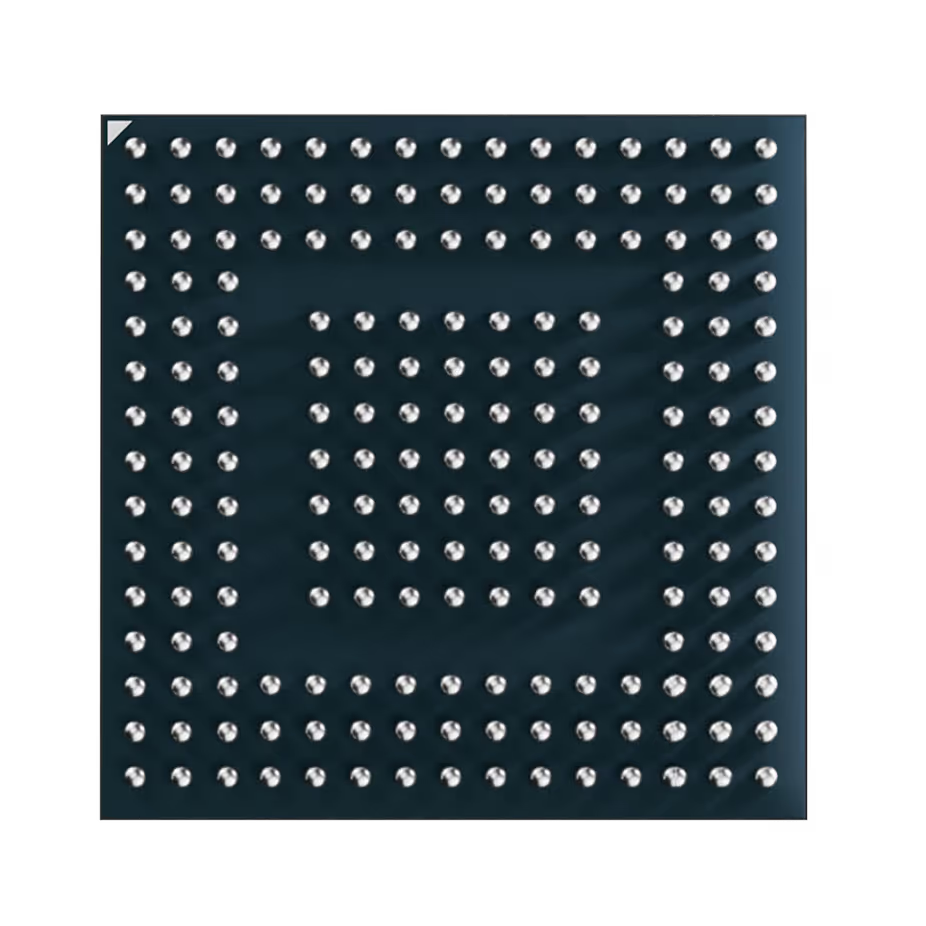
Package
Industrial automation systems often struggle with energy inefficiency, leading to higher maintenance cost and increased manual oversight.The Electron E1 general-purpose processor allows battery-operated vibration and acoustic sensors to perform local FFTs and predictive maintenance algorithms for years, eliminating the latency and cost of off-device communication. By enabling real-time data processing and predictive maintenance, our technology reduces manual oversight and improves operational efficiency.
- Standard BGA package
- 8.3mm x 7.1mm
- Onboard clock generation + power conversion
Ultra-low-power flexible serial peripherals
Industrial automation systems often struggle with energy inefficiency, leading to higher maintenance cost and increased manual oversight.The Electron E1 general-purpose processor allows battery-operated vibration and acoustic sensors to perform local FFTs and predictive maintenance algorithms for years, eliminating the latency and cost of off-device communication. By enabling real-time data processing and predictive maintenance, our technology reduces manual oversight and improves operational efficiency.
- 6x QSPI masters for peripherals
- 6x UART with flow control for peripherals
- 6x SPI slave for host communication
- 6x I2C masters for peripheral communication
- 72x GPIO
- 1x RTC

Ultra-efficient operation via Efficient’s Fabric
By locally processing sensor data directly on the Fabric architecture, the Electron E1 eliminates the energy tax of off-device communication while providing real-time monitoring of critical infrastructure. Compared to specialized accelerators that only optimize isolated kernels, the Fabric architecture accelerates the entire application, allowing remote environmental sensors to perform significantly more compute while maintaining years of autonomous operation on a single battery.
- High performance for the extreme edge:
- Low voltage: 5.4GOPS (50MHz system clock)
- High voltage: 21.6GOPS (200MHz system clock)
- Ultra-efficient and performance modes:
- Efficiency mode
- Performance mode
- Low-power and sleep and deep-sleep modes

